
Tuckpointing & Repointing Services
Expert tuckpointing and repointing services in Salem, OR that restore your masonry's strength and protect against water damage.
What Tuckpointing Really Means for Your Home
The mortar joints between your bricks are not just decoration. They hold everything together, keep water out, and maintain the structural integrity of your walls. When that mortar starts crumbling, your entire brick structure is at risk. At SMM Salem Masonry, we specialize in tuckpointing and repointing services that restore these critical joints before minor deterioration becomes major damage.
Here is what many homeowners get wrong about mortar. People think of it as permanent, but mortar actually has a shorter lifespan than the bricks it holds together. In Salem's wet climate, mortar joints typically need attention every 25 to 30 years. When you start seeing crumbling mortar, gaps between bricks, or white powdery deposits on your walls, that is your signal that tuckpointing cannot wait much longer.
The difference between tuckpointing and repointing is mostly terminology. Tuckpointing traditionally refers to filling joints with matching mortar and then adding a thin line of contrasting colored putty for visual effect. Repointing means removing old mortar and replacing it with new mortar that matches the original. In practice, most modern masonry work uses these terms interchangeably, and we focus on what matters most: removing deteriorated mortar and replacing it with properly mixed, color-matched mortar that will last for decades.
Why Your Mortar Joints Are Failing
Understanding why mortar breaks down helps you see why tuckpointing is so important. Mortar deterioration is not a sign that your original mason did poor work. It is simply the natural result of how masonry systems work over time. Here are the main culprits behind failing mortar joints:
- •Water penetration: This is the biggest enemy of mortar. When water gets into small cracks and freezes, it expands and breaks apart the mortar from the inside. Our wet Oregon winters make this especially problematic.
- •Salt crystallization: Those white stains you see on brick walls are salt deposits that form when water evaporates. These salts actually push apart mortar particles, causing crumbling and deterioration.
- •Poor original mortar mix: If the original mortar was too hard or the wrong composition for the bricks, it fails faster than it should. Modern tuckpointing uses properly formulated mortar that works with your specific brick type.
- •Structural movement: Houses settle over time, and that movement stresses mortar joints. Small cracks from settling let in water, which accelerates deterioration.
- •Age and weathering: Even perfect mortar eventually wears down from decades of exposure to sun, rain, wind, and temperature swings. That is just how masonry works.
The key is catching deterioration early. Once mortar joints fail completely, water gets behind your bricks and causes much more expensive problems. That is why we recommend regular inspections, especially for homes over 20 years old. Small tuckpointing projects cost far less than major repairs after water damage sets in. For homes with chimney issues along with failing mortar, we often coordinate chimney repairs with tuckpointing work to address everything at once.
How Professional Tuckpointing Works
Quality tuckpointing requires skill, the right tools, and attention to detail. We do not just slap new mortar over old joints and call it done. Here is our step-by-step process that delivers results you can count on.
Careful Mortar Removal
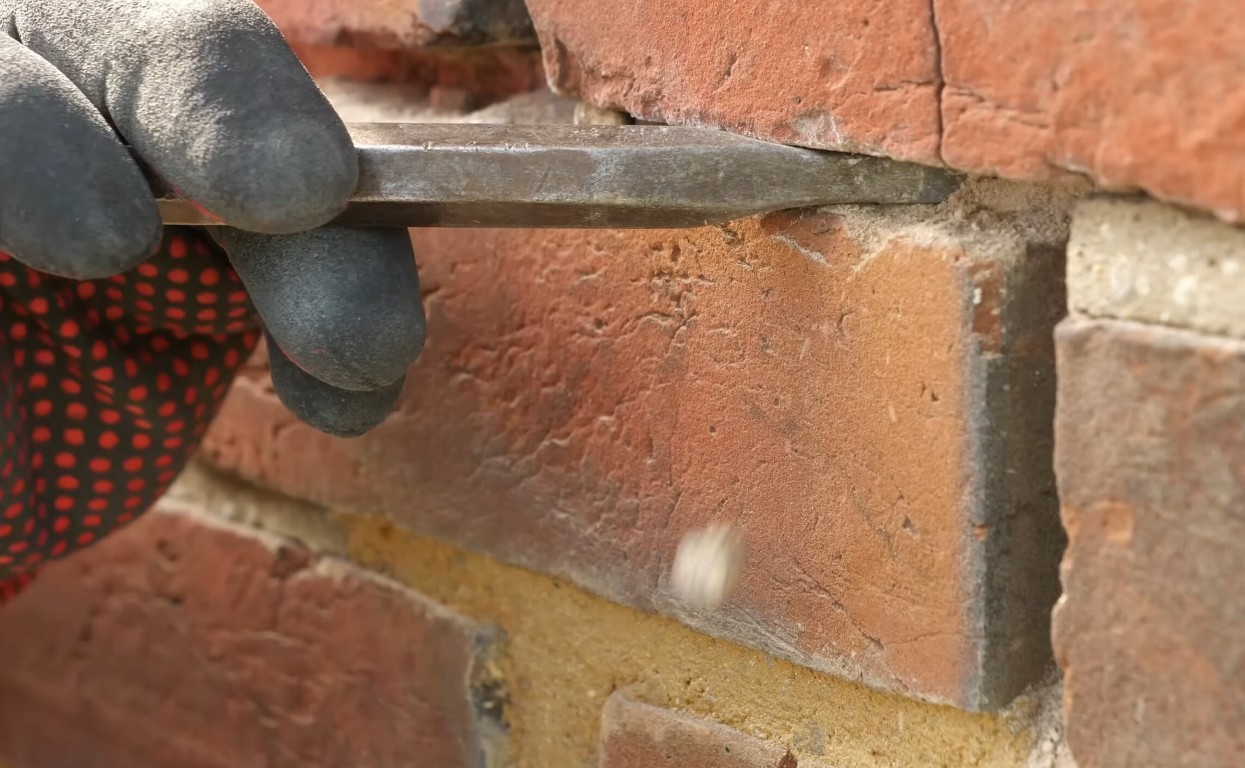
We start by removing deteriorated mortar to a depth of about three-quarters of an inch to one inch. This is deeper than many homeowners expect, but it is necessary for the new mortar to bond properly and last. We use specialized grinders and hand tools to cut out old mortar without damaging the surrounding bricks. This step takes time and skill because rushing it means damaged bricks or weak joints that will fail again quickly.
Joint Cleaning and Preparation
After removal, we thoroughly clean all dust and debris from the joints using compressed air and brushes. Clean joints are critical because any dust or loose material prevents proper bonding. We also wet the joints before applying new mortar. This keeps the dry bricks from sucking moisture out of the fresh mortar too quickly, which would weaken the bond.
Custom Mortar Mixing
Here is where expertise really matters. We analyze your existing mortar and mix new mortar that matches both the color and the hardness. Using mortar that is too hard causes the bricks to crack instead of the joints. Too soft and it crumbles prematurely. We get it right by matching the original lime-to-cement ratio and adding the correct pigments for color matching. Your new joints blend invisibly with the existing work.
Expert Application
We pack new mortar firmly into the joints using specialized tuckpointing tools. The mortar gets pressed in layers, each one compressed to eliminate air pockets and ensure solid bonding. Once the joints are filled, we tool them to match your original joint profile, whether that is concave, flush, or another style. Proper tooling is not just about looks. It compacts the surface and helps shed water away from the joint.
Curing and Cleanup
Fresh mortar needs proper curing time to reach full strength. We protect the work from rain and extreme temperatures during curing. After the mortar sets, we clean the entire surface to remove any residue or haze, leaving you with beautifully restored brickwork. For properties needing additional masonry work, we coordinate tuckpointing with services like brick repair to handle everything efficiently.
Protect Your Masonry Investment
Get your free tuckpointing estimate from Salem's mortar joint experts.
(971) 332-4887